
Technology
Autonomous (YC F25) is hiring MTS to build AI agents that manage your wealth
By Katherine Langford
Advertisement · Why this ad?
Marcus manages the day-to-day editorial workflow across all brands, coordinating coverage assignments and ensuring editorial standards are met. He previously served as city editor at the Pioneer Press and holds a degree in Political Science from Carleton College.
More from Marcus →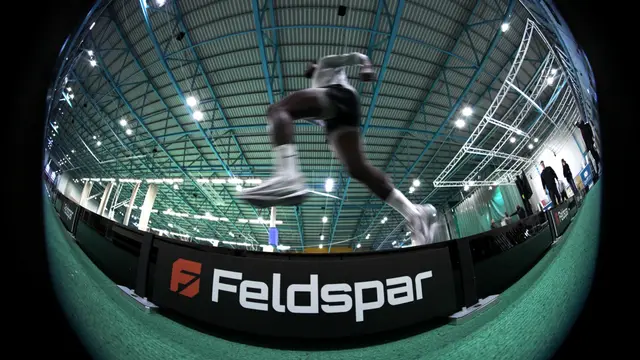
Feldspar, a British sports tech company which says its smart athletics track can transform the Olympics within a decade, is in talks to raise up to £6m from new investors.
Formula E. — Feldspar’s founders believe its sensor plate technology can revolutionise sport by providing data to improve athlete performance and prevent injury but also enhance the spectacle.
“We’ve seen a lot of innovations in running shoes and training methods and so on but I haven’t seen anything that changes the surface itself,” founder Alvina Chen tells City AM.
“We are trying to bring in new products to not just optimise performance for the athletes and coaches, but to bring in a lot more fans and digitalise as well.”
Feldspar’s two products are a super-fast track layer that allows athletes to race or train harder, and the cloud-connected sensor-plate technology that can be installed beneath it.
The latter is, the company says, “the world’s first modular platform for continuous, real-time force measurement across sports surfaces”, and could facilitate recurring subscription revenues.
The smart track – created by the Cambridge Design Collective – collects data on horizontal, vertical and lateral force as well as centre pressure, delivering real-time insights that can be applied to training or turned into sophisticated content.
Some 60m of track and 156 sensor plates were recently laid at the National Indoor Athletics Centre in Cardiff, where an 18-month pilot programme is now in progress.
“What we’re doing here is potentially very transformational,” says executive director Tim Godfrey, formerly of SailGP, Formula E and triathlon’s PTO. “Because the underlying surface in which sports are played on is, in our mind, going to change forever if we get a lot of things right.”
He adds: “Nobody has been able to solve this particular problem of getting this level of biomechanical force data at scale. People do it already, but in a single force plate. No one’s done it to the scale we’ve done before. That’s the technological innovation.”
Feldspar’s first three years have been funded this far by the family of athlete-turned-entrepreneur Chen but the company is now in talks with investors over a seed round.
It is aiming to raise £5.5m to £6m, Chen says, and is keen to attract backing from sports organisations which may be able to play a role in the products’ evolution.
Godfrey adds: “We think it’s going to be strategic partners who understand, first and foremost, the value of the technology in a sporting environment.
“We do have lots of interest from institutional investors as well, but they are going to possibly come a little bit further down the line, maybe Series A, Series B.”
Smart track tech at the Olympics and new Man Utd stadium?
While the sensor technology has been designed for running tracks, it could have a much wider application and provide insights for athletes, coaches and viewers in many sports.
Godfrey says court-based sports have already shown interest, and believes there is no reason why it shouldn’t be possible to extend it to cover the entirety of a full-size football pitch.
“So you could imagine the new Manchester United football stadium that’s being built, our sensors all being connected underneath that,” says Godfrey. “Now, that’s quite blue sky thinking, but it’s 100 per cent achievable.”
Cost is currently a barrier to kitting out a whole athletics track with Feldspar’s sensor plates but that – and adoption in the Olympic Games – are among the company’s goals.
“If a whole stadium wanted eight lanes, 400m with the sensors, today the price is not something that we would look to do, because we need to do a lot more development and get the manufacturing and the production and the supply chain,” says Godfrey.
“But by 2036, we would make it achievable for a stadium or an event owner to purchase that.”
Boston
Technology
Saturday, November 14, 2026
3 min
By Katherine Langford

By Marcus Chen

By Katherine Langford

By Marcus Chen