
Business
Here’s what Megaspeed, the company at the forefront of the Nvidia scandal, is now saying
By Katherine Langford
Advertisement · Why this ad?
Katherine oversees editorial operations across all six brands. Before joining The Meridan Group, she spent 14 years at the Minneapolis Star Tribune, where she led the metro desk through its digital transformation. She holds a Master's in Journalism from Northwestern's Medill School.
More from Katherine →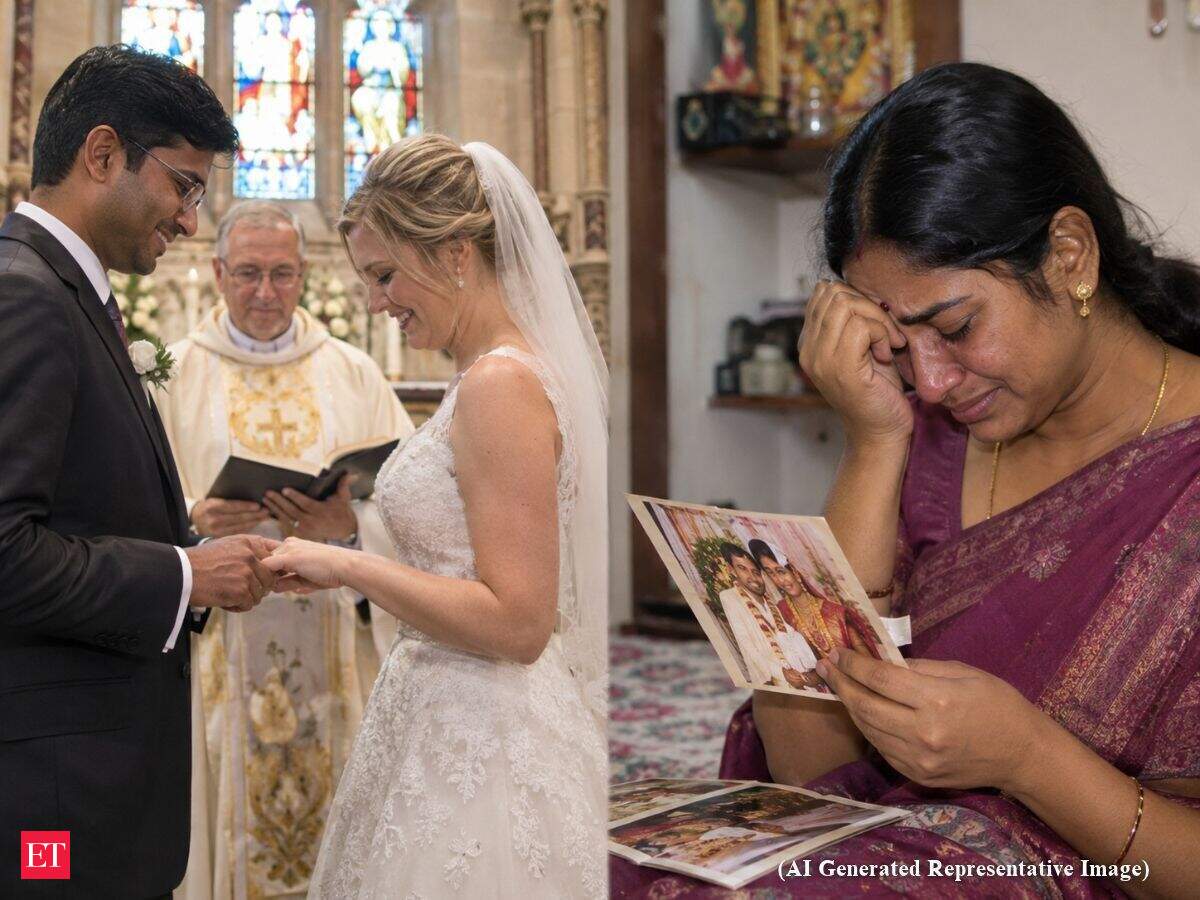
A doctor from Andhra Pradesh married a woman under Hindu customs in 2003, moved to the United Kingdom and later obtained a divorce from an English court after his divorce proceedings in India failed. He married another woman in the UK in March 2014. The Supreme Court has now refused to quash the criminal case accusing him of bigamy , holding that the foreign divorce decree could not automatically dissolve his Indian marriage. The court, however, quashed the proceedings against his parents and second wife, finding insufficient material to establish their involvement in the alleged offence. A bench of Justices Prashant Kumar Mishra and Shree Chandrashekhar delivered the judgment on November 3, 2026. Doctor first approached Indian court for divorce Dr N. Sridhar Reddy married N. Geetha Prasanthi on April 18, 2003, at Sattenapalli in Andhra Pradesh, according to Hindu rites and customs. The couple initially lived in Hyderabad, where Reddy was pursuing his postgraduate studies at Osmania Medical College. He moved to the UK on February 4, 2005, to pursue his medical career. His wife joined him there on May 7, 2006. In August 2007, she returned to her parental home in Sattenapalli for the birth of their child. Their son was born on November 4, 2007. Reddy claimed that his wife did not return to the UK despite his repeated requests. Live Events As their relationship deteriorated, Reddy approached a court in Guntur district seeking divorce and custody of their child. The proceedings were dismissed. He subsequently appealed before the Andhra Pradesh High Court but withdrew the appeal. His first marriage, therefore, continued to subsist under Indian law. British citizenship followed by divorce in England Reddy acquired British citizenship through naturalisation on February 1, 2013, after eight years of continuous residence in the UK. On August 16, 2013, he filed for divorce before Cambridge County Court. His first wife objected to the foreign court's jurisdiction and questioned its authority to dissolve their marriage. The English court initially ordered a decree nisi on November 27, 2013. On January 29, 2014, the divorce was made absolute on the ground of irretrievable breakdown of marriage. Reddy married Geetha Inturi in Norfolk, UK, on March 3, 2014. Almost two years later, on February 1, 2016, his first wife approached Sattenapalli Town Police Station with a complaint alleging bigamy and criminal conspiracy. Why the Supreme Court rejected the foreign divorce defence Reddy argued that he was already a British citizen when he married for the second time and that the wedding had taken place outside India. He also maintained that the English divorce decree was valid and that his first marriage had ended before the second wedding. His lawyers relied on Section 14 of the Code of Civil Procedure, which provides for a presumption that a certified foreign judgment was delivered by a court of competent jurisdiction. The Supreme Court examined this argument alongside Section 13 of the CPC, which sets out circumstances in which foreign judgments cannot be treated as conclusive in India. The bench referred to an earlier Supreme Court ruling in Y. Narasimha Rao v. Y. Venkata Lakshmi, which laid down that a foreign divorce decree must satisfy the requirements of the matrimonial law governing the marriage to be recognised in India. In Reddy's case, the marriage had taken place under Hindu law, while the English court granted divorce on the ground of irretrievable breakdown of marriage. The Supreme Court pointed out that this was not a statutory ground for divorce under the Hindu Marriage Act. It also noted that the first wife had challenged the English court's jurisdiction. Her participation in those proceedings could not, at this stage, be treated as unconditional submission to its authority. The bench rejected Reddy's argument that his British citizenship and the location of his second wedding protected him from prosecution. It said the legal consequences of his subsisting Indian marriage could not be defeated by a subsequent change in nationality. The court also rejected his objection over the delay in filing the complaint, observing that bigamy is a continuing offence. Parents and second wife get relief The Supreme Court treated the allegations against the other accused separately. Reddy's parents, Nallapareddy Krishna Reddy and Nallapareddy Vasantha Kumari, argued that there was no specific act showing their involvement in the alleged second marriage. The bench found that the chargesheet did not establish an agreement or active participation by them in committing bigamy. Mere knowledge of the second marriage was not sufficient to establish criminal conspiracy. The second wife, Geetha Inturi, had also argued that she was unaware of Reddy's first marriage. The court found no material, beyond the alleged cohabitation or marriage, showing that she knowingly participated in the offence or was aware that his first marriage continued to subsist. SC keeps bigamy case against doctor alive The Supreme Court dismissed Reddy's appeal and allowed the criminal proceedings against him under Section 494 of the Indian Penal Code to continue. It quashed the proceedings against his parents and second wife, allowing their appeals. The bench clarified that its findings were limited to the question of whether the criminal proceedings should be quashed at this stage and did not amount to a final decision on the merits of the bigamy case. Add as a Reliable and Trusted News Source Add Now! (You can now subscribe to our Economic Times WhatsApp channel ) Read More News on bigamy Married man goes abroad Married man divorces using foreign laws foreign divorce decree validit second marriage without divorce Indian doctor UK marriage married in india divorced abroad divorce using foreign laws second marriage hindu marriage act bigamy in hindu marriage act (You can now subscribe to our Economic Times WhatsApp channel ) Read More News on bigamy Married man goes abroad Married man divorces using foreign laws foreign divorce decree validit second marriage without divorce Indian doctor UK marriage married in india divorced abroad divorce using foreign laws second marriage hindu marriage act bigamy in hindu marriage act Prime Exclusives Investment Ideas Stock Report Plus ePaper Wealth Edition Business of Odd Things: The farm that needs no land, freshwater, or fertiliser KYC and KYB: Inside Pidilite, the company that turned Fevicol into a word for a strong bond – Part 1 of 3 Seoul halts trading, Nifty has its best week since 2021: Money leaving the AI trade – will it land in India? Junk bonds are cracking at the bottom. Will the noise get loud enough to make ‘junk bond’ a household term again? PNG connections rise half a million, but how many use piped gas for cooking? Some elections matter more than you know: No crop changed in the fields, yet sugar, coffee and soya got cheaper in a day 1 2 3 View all Stories
By Katherine Langford

By Marcus Chen
By Katherine Langford

By Marcus Chen