
Business
France Braces for Marches and Strikes Amid Stalled Budget
By Marcus Chen
Advertisement · Why this ad?
Katherine oversees editorial operations across all six brands. Before joining The Meridan Group, she spent 14 years at the Minneapolis Star Tribune, where she led the metro desk through its digital transformation. She holds a Master's in Journalism from Northwestern's Medill School.
More from Katherine →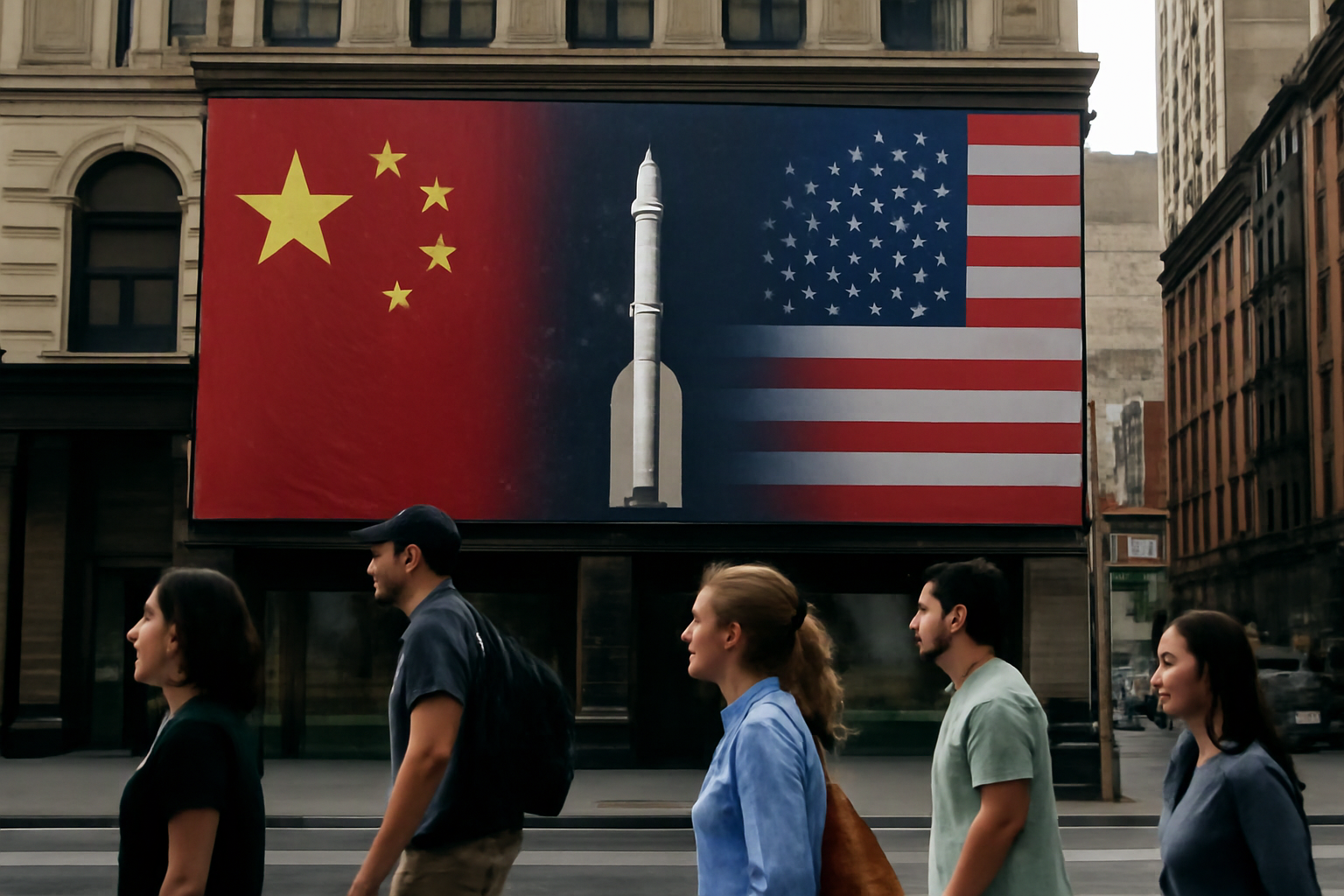
As the sun rises over New York City, the skyline reflects a new era of ambition—not just on Earth, but beyond its atmosphere. The race to dominate space is heating up, with China and the United States vying for supremacy in an arena that could redefine global power dynamics. This competition is not merely about technological prowess; it encompasses economic growth, military strength, and international prestige. The stakes are high, and the implications for both nations, as well as for the world, are profound.
In recent years, the United States has made significant strides in its space exploration initiatives, particularly with NASA's Artemis program, which aims to return humans to the moon by 2024. This ambitious project is designed not only to establish a sustainable human presence on the lunar surface but also to prepare for future missions to Mars. Meanwhile, China has been rapidly advancing its own space program, successfully landing a rover on the moon and launching a crewed space station. The question looms large: which country will send people to the moon next?
The competition is intensifying as both nations invest billions into their respective programs. According to estimates, the U.S. government allocated approximately $23 billion to NASA for the 2023 fiscal year, while China has committed upwards of $11 billion to its space efforts. These investments reflect a broader strategy to enhance national security and economic competitiveness through space exploration.
Residents of New York City, a hub of innovation and technology, are keenly aware of the implications of this space race. Local universities and research institutions are increasingly involved in partnerships with government agencies and private companies, fostering a culture of collaboration. For instance, initiatives at institutions like New York University and Columbia University are paving the way for the next generation of scientists and engineers who may one day contribute to these monumental missions.
The excitement surrounding space exploration has sparked interest among students in STEM (science, technology, engineering, and mathematics) fields. Programs aimed at inspiring young minds are proliferating, from robotics clubs to summer camps focused on aerospace engineering. Local educators emphasize the importance of fostering curiosity and creativity, qualities essential for future pioneers in space. In particular, initiatives like the NYU Tandon School of Engineering and Columbia's School of Engineering and Applied Science have created specialized tracks for students interested in aerospace technologies, offering hands-on experiences and mentorship.
Moreover, the private sector is also playing a crucial role. Companies like SpaceX and Blue Origin are revolutionizing the industry with innovative technologies and cost-effective solutions, further stimulating local economies. New York's tech sector is witnessing a surge in startups focusing on aerospace technologies, creating jobs and attracting talent. For example, the New York Tech Alliance has been instrumental in connecting entrepreneurs with resources and investors, fostering a vibrant ecosystem for innovation.
The space race is not just a topic of academic discussion; it resonates deeply within the community. Local residents express a mix of excitement and concern regarding the implications of this competition. “It’s thrilling to think about humans going back to the moon and even Mars,” says Maria Gonzalez, a high school science teacher in Brooklyn. “But we also need to think about how this affects our planet. Space exploration should benefit all of humanity, not just a few.” Her sentiments echo a growing belief that the exploration of space should be coupled with efforts to address pressing issues on Earth.
Community leaders are also engaging in dialogue about the future. Councilman David Greenfield, who represents a district with a strong tech presence, emphasized the importance of investing in education and infrastructure to prepare for the future. “We need to ensure that our students are not only consumers of technology but also creators,” he stated during a recent town hall meeting focused on STEM education. “The race to space should inspire us to reach for the stars while also solving the problems we face here at home.”
As we look ahead, the timeline for lunar missions is becoming clearer. NASA's Artemis program aims to land the first woman and the next man on the moon, with a focus on sustainable exploration. Meanwhile, China is expected to increase its lunar ambitions, potentially establishing a base on the moon by the end of the decade. This competition raises critical questions about international collaboration and the potential for conflict in space.
Experts suggest that while competition can drive innovation, it is essential for both nations to consider cooperative frameworks that could benefit humanity as a whole. The Outer Space Treaty of 1967 established a foundation for peaceful exploration, and discussions around updating this treaty to reflect current realities are gaining traction. As countries like India and the UAE also ramp up their space programs, the need for a collaborative approach becomes even more pressing.
International cooperation in space exploration is not just a lofty ideal; it is a necessity in an increasingly interconnected world. Collaborative projects like the International Space Station (ISS) have demonstrated that countries can work together for the common good. As nations prepare for missions to the moon and beyond, it is crucial to establish frameworks that prioritize peaceful exploration and shared benefits. This could involve joint missions, shared research, and the pooling of resources to tackle challenges like space debris and planetary protection.
The race to dominate space is not just a contest of technological capabilities; it is a reflection of national identity and aspirations. For the United States, reclaiming its status as a leader in space exploration is intertwined with its vision of the American dream—an idea rooted in innovation, exploration, and the pursuit of knowledge. For China, establishing itself as a space hegemon could bolster its global standing and economic strength.
As this competition unfolds, it is crucial for communities, especially those in cities like New York, to engage with the possibilities that space exploration brings. The future of humanity may well depend on our ability to work together, transcending borders and differences in the pursuit of knowledge and discovery. The next decade will be pivotal, and how we respond to these challenges will shape not only our future in space but also our relationships on Earth.
By Marcus Chen

By Katherine Langford

By Katherine Langford

By Marcus Chen